
You are now leaving genglycoshcp.com.
Would you like to proceed?

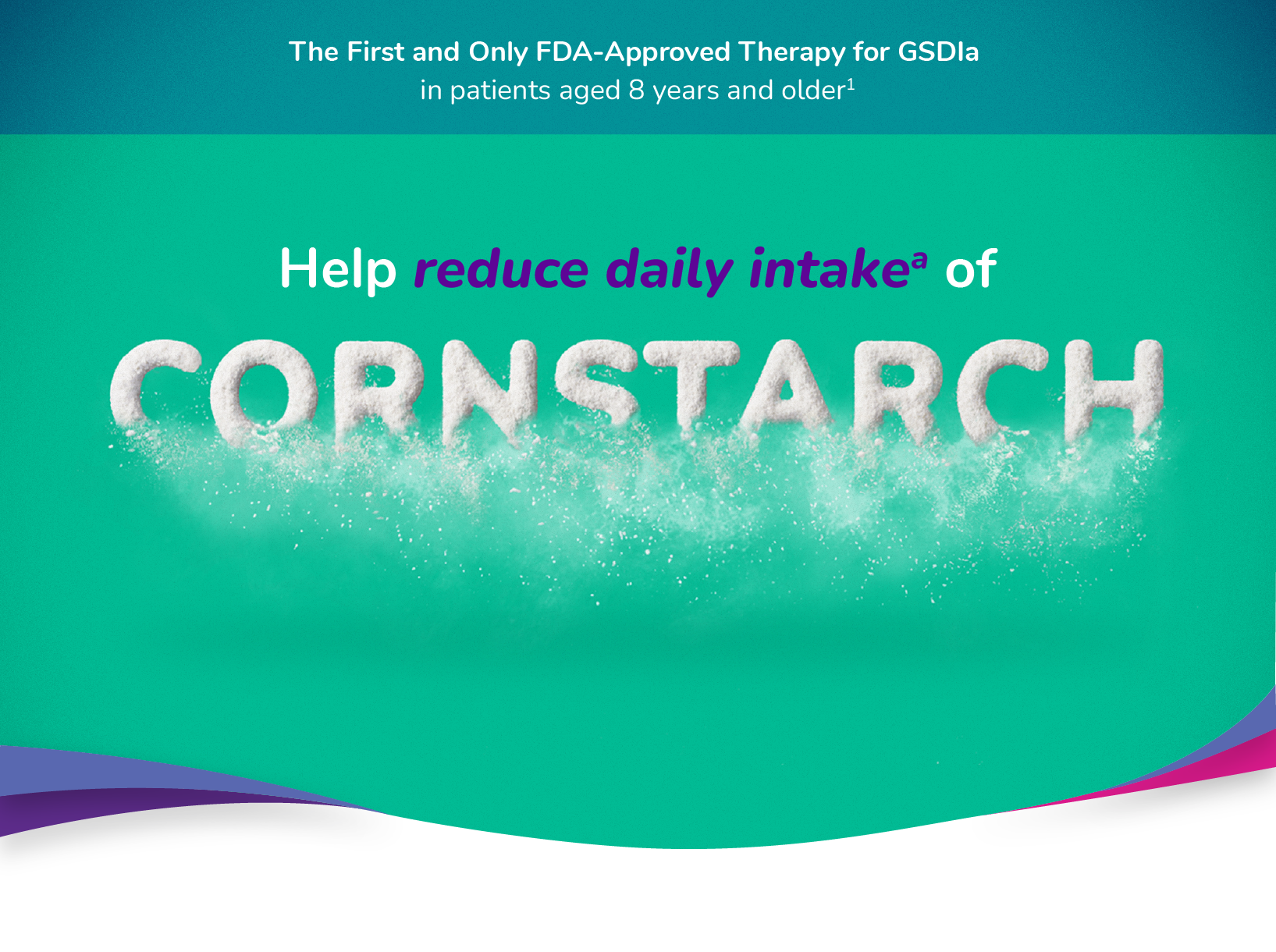
aBased on reduction in total daily cornstarch intake in GENGLYCOS patients compared with placebo patients at Week 48.1
Treatment With GENGLYCOS
Single-dose gene therapy
administered as an intravenous
infusion1

Enrollment Form

To initiate treatment with GENGLYCOS, complete the Enrollment Form with your patient.
Patient Enrollment FormINDICATION AND IMPORTANT SAFETY INFORMATION
Indication
GENGLYCOS (pariglasgene brecaparvovec-opnr) is indicated to reduce daily cornstarch intake as an adjunct to nutritional management in adult and pediatric patients 8 years of age and older with glycogen storage disease type Ia (GSDIa).
This indication is approved under accelerated approval based on reduction in daily cornstarch intake. Continued approval for this indication may be contingent upon verification of clinical benefit in confirmatory trial(s).
Important Safety Information
GENGLYCOS is contraindicated in patients with known severe hepatic fibrosis or cirrhosis.
Hypersensitivity and Infusion Reactions (IRs)
- Hypersensitivity reactions including anaphylaxis and IRs have occurred with GENGLYCOS treatment. Severe reactions have been reported. Monitor for signs and symptoms of hypersensitivity and IRs, including urticaria, flushing, hypotension, bronchospasm, dyspnea, chest tightness, nausea, vomiting, headache, abdominal pain, lightheadedness, flu-like symptoms, shivering, rash, and hypertension.
- Premedicate with acetaminophen and non-sedating antihistamines and administer GENGLYCOS according to recommended infusion rates. Monitor patients during and after completion of GENGLYCOS infusion as clinically indicated. If anaphylaxis or severe IR occurs, pause GENGLYCOS infusion immediately and initiate medical treatment as clinically indicated, monitoring as needed. For mild to moderate IRs, consider slowing or temporarily interrupting the infusion, and administer symptomatic treatment as clinically indicated. The infusion may be restarted at half the prior rate upon resolution of symptoms.
- Medical support measures, including cardiopulmonary resuscitation equipment and medications for the treatment of anaphylaxis (e.g., epinephrine, antihistamines, corticosteroids), should be available during GENGLYCOS (pariglasgene brecaparvovec-opnr) administration.
Hepatotoxicity
- Immune-mediated hepatotoxicity, with elevated alanine aminotransferase (ALT) and/or aspartate aminotransferase (AST) levels, has occurred with GENGLYCOS. Avoid use in patients with preexisting hepatic impairment or acute hepatic viral infection.
- Prior to GENGLYCOS infusion, evaluate liver-related medical history and assess liver function by clinical examination and laboratory testing. Advise patients to immediately report signs and symptoms of hepatotoxicity, including fatigue, jaundice, dark urine, nausea, vomiting, and right upper quadrant pain. Administer corticosteroids to all patients after GENGLYCOS infusion in order to mitigate hepatic reactions. Elevated transaminases may require adjustment of the corticosteroid treatment regimen, including increased dose or prolongation of the corticosteroid taper.
- Monitor transaminase levels for the first 6 months after GENGLYCOS administration. Continue to monitor transaminases in all patients who develop transaminase elevations, until transaminases return to baseline or as clinically indicated.
Adrenal Insufficiency
- Adrenal insufficiency, including serious events, has been reported in patients receiving GENGLYCOS during corticosteroid use and tapering.
- Signs and symptoms of adrenal insufficiency include fatigue, weakness, anorexia, nausea, vomiting, hypotension, hyponatremia, and hypoglycemia. Adrenal crisis may present as severe hypotension, acute abdominal pain, or loss of consciousness.
- Monitor patients for signs and symptoms of adrenal insufficiency and adrenal crisis after GENGLYCOS administration during and after corticosteroid therapy and tapering. Taper corticosteroid therapy gradually. Do not abruptly discontinue corticosteroid therapy.
AAV Vector Integration and Risk of Tumorigenicity
- There is a theoretical risk of tumorigenicity due to integration of AAV vector DNA into the genome.
- GENGLYCOS is composed of a recombinant, non-replicating AAV8 vector whose DNA persists largely in episomal form. Random integration of recombinant AAV-vector DNA into human DNA has been reported with AAV gene therapies. The clinical relevance of individual integration events is unknown, but it is acknowledged that individual integration events could potentially contribute to a risk of tumorigenicity. If a tumor develops in a patient receiving GENGLYCOS, health care providers should contact and report the tumor to Ultragenyx Pharmaceutical Inc. at 1-888-756-8657.
- Seven serious adverse events were observed in the Primary Efficacy Analysis Period (PEAP) of Study 1 (Weeks 1-48), including anaphylaxis/infusion reaction (2), adrenal insufficiency (2), high lactate level (2) and hypoglycemia (1).
- The most common adverse reactions during the PEAP of Study 1 (occurring in ≥10% of patients) with higher frequency in GENGLYCOS compared to placebo were ALT/AST enzyme elevated (71%), nausea (38%), headache (24%), hypertriglyceridemia (29%), adrenal insufficiency (24%), constipation (19%), hyperglycemia (14%), acne/dermatitis acneiform (19%), Cushingoid features (14%), and anaphylaxis (10%).
Vaccinations
- Vaccine schedules may need to be adjusted for immunosuppressive therapy, and vaccines should be avoided 1 month prior to GENGLYCOS administration.
Pregnancy
- GENGLYCOS should not be used during pregnancy. There are no data on the use of GENGLYCOS in pregnant women. It is unknown whether GENGLYCOS can cause fetal harm when administered to a pregnant woman or can affect reproductive capacity.
Contraception
- Women of childbearing potential should use effective contraception for at least 12 months after administration of GENGLYCOS.
- For 6 months after administration of GENGLYCOS, men must not donate semen, and men of reproductive potential and their female partners must prevent or postpone pregnancy using an effective form of contraception.
Vector Shedding
- Inform patients/caregivers that vector distribution in blood and vector shedding in urine, stool, and saliva can occur after GENGLYCOS infusion. Advise patients/caregivers on proper hygiene when handling patient body waste. These precautions should be followed for 3 months after GENGLYCOS infusion.
Report negative side effects of prescription drugs to the FDA. Visit www.fda.gov/medwatch or call 1-800-FDA-1088. You may also report side effects to Ultragenyx Pharmaceutical Inc. at 1-888-756-8657.
Please see the full Prescribing Information for GENGLYCOS.
FDA, US Food and Drug Administration; GSDIa, glycogen storage disease type Ia.
Reference
1. GENGLYCOS [Prescribing Information]. Novato, CA: Ultragenyx Pharmaceutical Inc; August 2026.